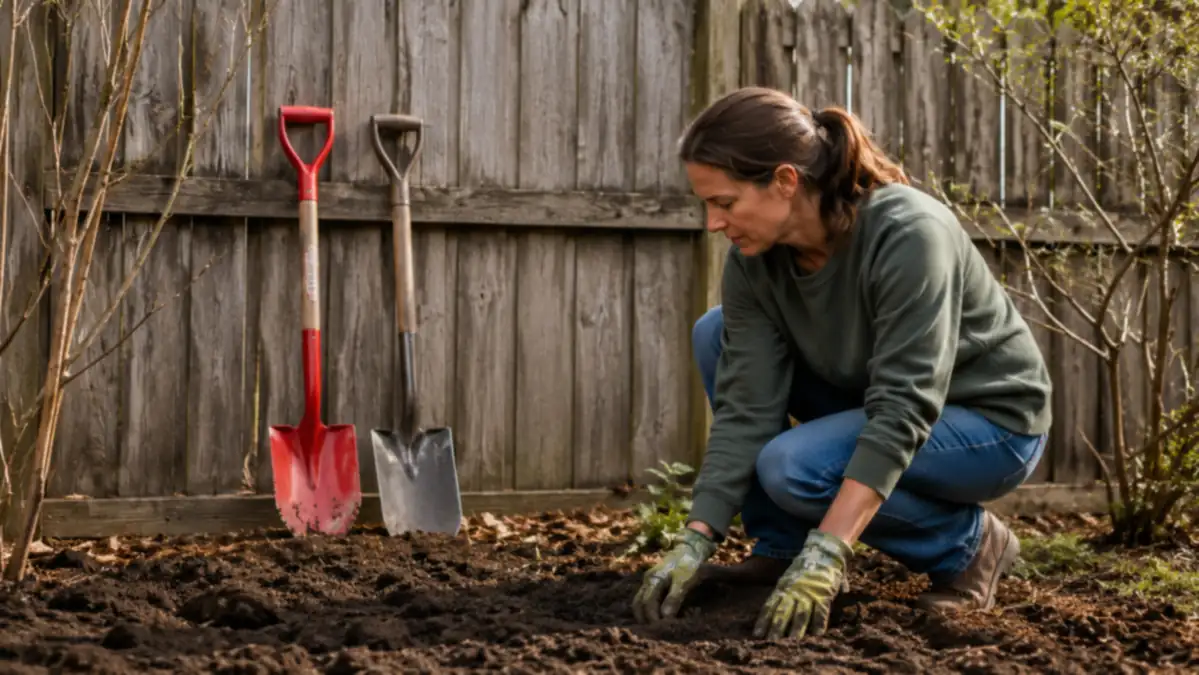
Short answer: if you're fighting roots, the Root Slayer serrated shovel is the one that actually finishes the job without you standing on the blade and bouncing off. I've owned a plain flat spade for close to twenty years and picked up the Root Slayer three seasons ago after I got tired of hacking at a maple root system with a garden saw kneeling in the mud. They're not really the same tool, even though they look similar hanging on the wall, and I still use both depending on what I'm doing that day.
This isn't one of those comparisons where I tell you the newer, pricier tool wins every category to sell you on it. A plain spade genuinely beats the Root Slayer at a few things, and I'll say exactly where and why below, before we get into the parts where the serrated blade earns its keep in my shed.
| Spec | Root Slayer Serrated Shovel | Standard Garden Spade |
|---|---|---|
| Blade edge | Serrated saw teeth on both sides of the blade | Smooth straight edge, no teeth |
| Cutting through roots up to 1.5 inches | Saws through in a handful of push-pull strokes | Bounces or needs a separate saw first |
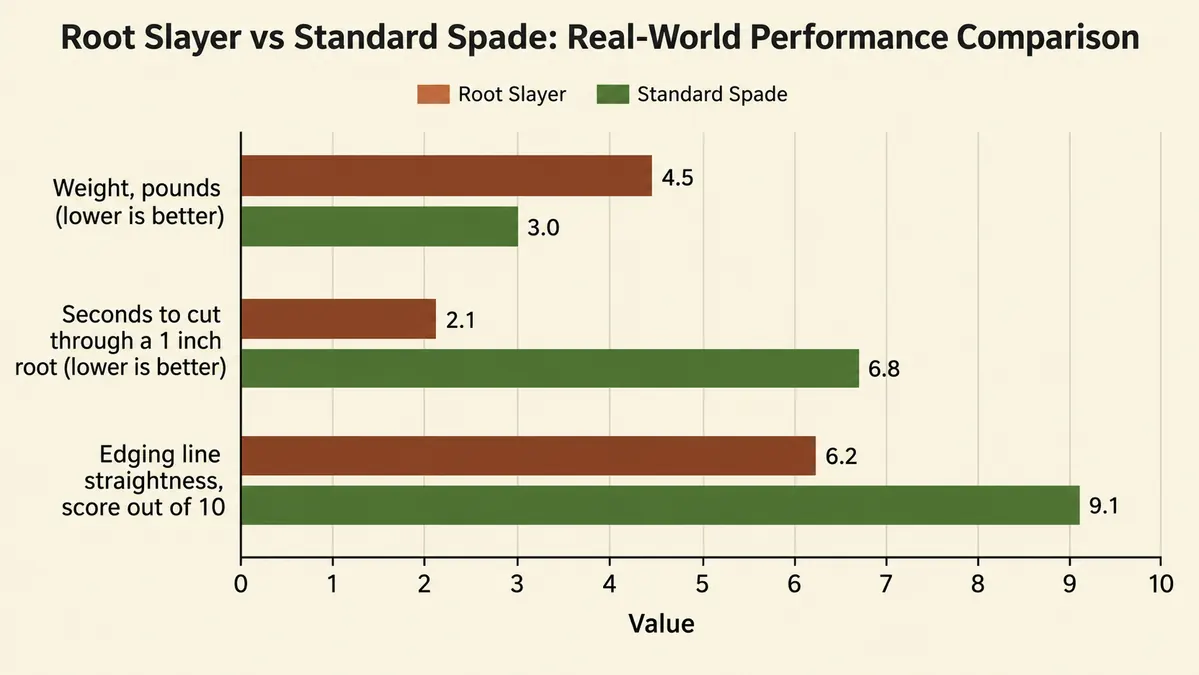
| Weight | About 4.5 lbs, welded three-piece steel | About 3 lbs, single-piece stamped steel |
| Clean, straight edging cuts | Teeth can leave a slightly ragged edge line | Flat edge gives a crisp, straight line |
| Scooping and moving loose soil or mulch | Teeth catch a little on loose material | Smooth edge scoops cleanly, less drag |
| Durability under heavy prying | Welded step plate and full-tang build, rated for prying | Can bend or crack at the neck under hard prying |
| Foothold comfort | Wide serrated step plate is easy to stand on | Thin edge digs into the sole of your boot |
| Best for | New beds, transplanting shrubs, root removal | Lawn edging, general digging, moving soil |
Where the Root Slayer Wins
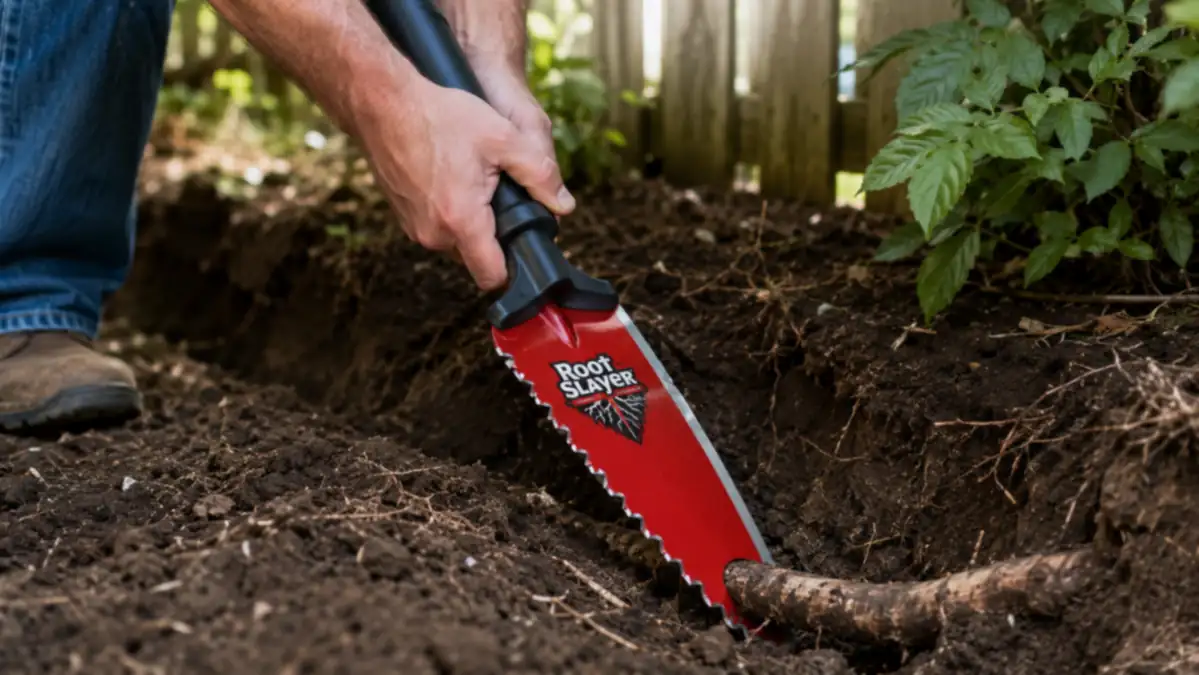
The teeth are the whole story here, and they work more or less like a bread knife wedged into a root instead of a spade blade bouncing off one. Last spring I was digging a new bed along the side yard and hit a root system from a maple two properties over, thick fibrous roots running every direction under the topsoil. My old plain spade just skipped off the surface of anything thicker than my finger. I switched to the Root Slayer, worked the serrated edge down with a rocking push-pull motion the same way you'd use a hand saw, and cut through roots up to about an inch and a half without stopping to grab a separate pruning saw.
The build quality matters just as much as the teeth once you're actually prying with it. The Root Slayer is a three-piece welded design, blade, shaft, and a step plate all welded together rather than stamped from one thin sheet of steel. I've stood on that step plate and levered out a stubborn root ball with my full body weight more than once, and it hasn't so much as flexed at the neck. My plain spade, by comparison, has a visible slight bend near the collar from a moment years ago when I tried to pry up a rock that was bigger than I judged.
Stop fighting roots with a spade that isn't built for it
The Root Slayer's serrated edge saws through roots instead of bouncing off them, and the welded step plate holds up to real prying. Check today's price and current rating on Amazon.
Amazon Check Today's Price on Amazon →The wide serrated step plate also just feels better under a boot than the thin edge on my spade, which I never appreciated until I compared them back to back. When you're leaning your full weight down into compacted clay, a thin metal edge digging into the arch of your boot after twenty minutes is genuinely uncomfortable. The Root Slayer's wider foothold spreads that pressure out, and I can dig for longer stretches without my foot going numb, even on the days I'm working through hard, dry ground that hasn't seen rain in a while.
Where a Standard Spade Wins
None of that means the plain spade is obsolete in my shed, and I want to be honest about where it's still the better tool. Weight is the first thing. The Root Slayer's extra steel adds up to a pound and a half heavier than my old spade, and over a long afternoon of turning a whole bed, that difference shows up in my shoulders. For general digging where you're not fighting anything tougher than loose garden soil, the lighter spade is simply less tiring to swing over and over.
Edging is the other clear win for the plain spade, and it isn't close. When I'm cutting a straight line along the lawn where it meets the mulch bed, I want a flat, smooth edge that goes into the turf in one clean push and leaves a crisp line I don't have to go back and tidy up. The Root Slayer's teeth are great at sawing through a root, but that same serrated edge can leave a slightly ragged line when you're just trying to slice through grass and soil, not cut anything woody. I edge my whole front border with the plain spade every spring and reach for the Root Slayer only if a root is actually in the way.
There's also a simple learning curve difference worth mentioning. Handing the plain spade to my grandson the first time he helped me in the yard, he understood it in about ten seconds, push down, lift, done. The Root Slayer takes a little more instruction, since pushing straight down on undisturbed soil doesn't cut as cleanly as the rocking motion the teeth are built for. It's not hard to learn, but it's not the tool I'd hand a total beginner without showing them how the sawing motion works first.
I bought the Root Slayer to solve one specific problem, roots, and it solved it. I didn't expect it to also become the tool I grab for prying, since the plain spade still handles most of my regular digging just fine.
Scooping is a smaller thing but worth mentioning if you do a lot of moving soil, compost, or mulch around the yard. A plain smooth blade slides under loose material and lifts it cleanly. The serrated teeth on the Root Slayer catch a little on loose, crumbly soil and mulch, so it's not the tool I'd pick for filling in a bed with fresh compost or shoveling mulch out of a wheelbarrow. It's built to cut, not to scoop, and it shows when you use it that way.
How They Actually Feel Side by Side
The difference is easiest to feel the first time you push each blade into the same patch of ground. With the plain spade, if there's nothing but soil down there, it slides in with barely any resistance and you're lifting a scoop of dirt in one motion. Hit even a modest root and that same motion turns into a jarring stop, the blade skipping sideways off the root instead of going through it. That's the moment where I used to put the spade down and go looking for a hand saw or loppers, kneeling in the dirt to cut the root separately before I could keep digging.
With the Root Slayer, hitting a root doesn't stop the job, it just changes the motion. Instead of one clean push, I rock the blade back and forth like sawing, and the teeth work through the root in a handful of strokes. It takes more effort per stroke than a plain push into soil, but it means I never have to stop, put the shovel down, and go find another tool. For anyone who's spent a Saturday morning digging a new bed only to discover a root system halfway through and lose twenty minutes switching tools, that alone is the reason to own one.
One Tool or Two
I get asked fairly often whether it makes sense to just own the Root Slayer and skip the plain spade entirely, since it does cut roots and it does dig soil. In practice, I don't recommend that. Yes, the Root Slayer can dig regular soil just fine, but for a full afternoon of turning beds or edging a long border, the extra pound and a half and the less-clean edge line make the plain spade the better everyday tool. I think of the Root Slayer as the specialist that comes out when there's a root, a stump, or a stubborn root-bound plant in the way, and the plain spade as the one that handles the other ninety percent of what I do in the yard.
That said, if I could only own one, and my yard had mature trees anywhere near where I plant, I'd keep the Root Slayer. Losing a little edging cleanliness and carrying a bit more weight is a smaller cost than standing in the yard with a bounced-off blade and no way to finish the hole. Most homeowners with established landscaping run into a root at some point every season, and having the right tool already in hand beats walking back to the shed for a saw halfway through the job.
Who Should Buy the Root Slayer
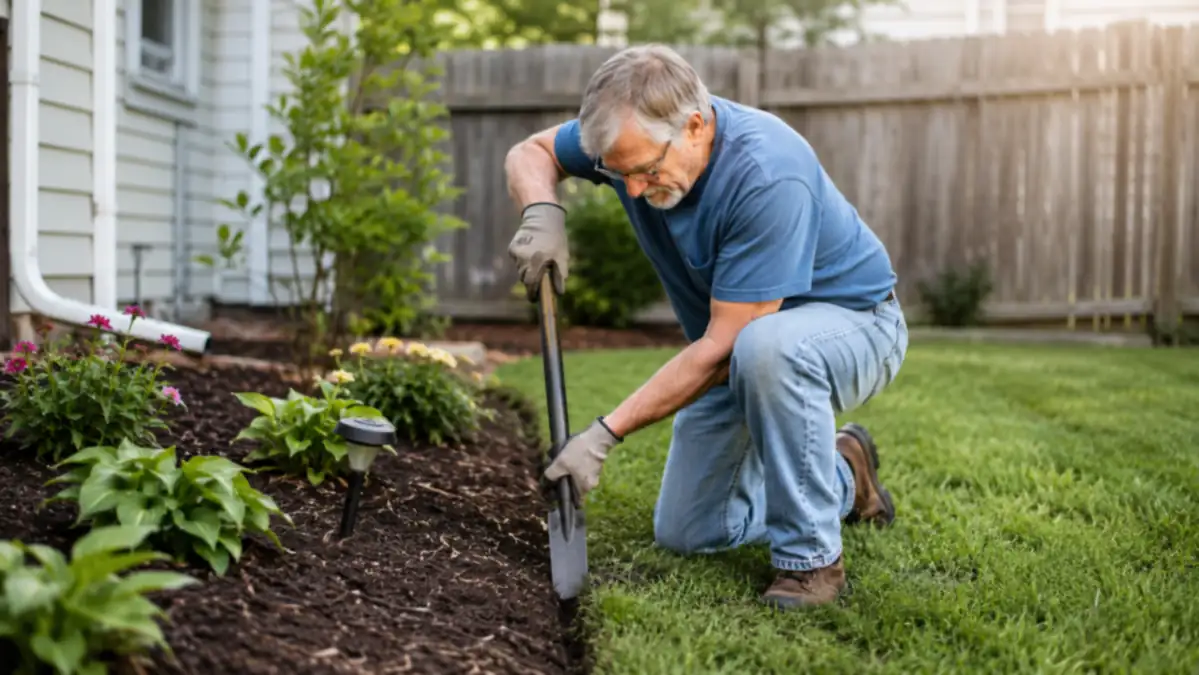
If you're planting a new bed anywhere near an established tree, removing an overgrown shrub with a real root ball, or transplanting anything with roots that have had years to spread, the Root Slayer earns its spot in the shed. It's also the better choice if you tend to pry things out of the ground, small stumps, stubborn rocks, root-bound perennials, since the welded build takes that kind of stress without bending. For more on how mine has held up over repeated use, my honest review covers the two spots where it's actually shown wear after three seasons of regular use.
Who Should Buy a Standard Spade
If your digging is mostly routine, edging a lawn border, turning soil in beds that are already established, moving compost or mulch around, a plain spade is lighter, cheaper to replace, and better suited to clean scooping and edging work. Most yards don't need a root-fighting tool for every job, and there's no reason to swing the heavier Root Slayer for tasks a lighter spade handles just as well or better. I'd keep both if you can, but if you only ever plant in beds that are already cleared of roots and your yard has no mature trees nearby, the plain spade alone will cover you for years.
For anything with roots in the way, this is the one that finishes the job
Serrated edge, welded step plate, built to saw through roots instead of bouncing off them. See the current price and rating on the Root Slayer shovel on Amazon.
Amazon Check Today's Price on Amazon →