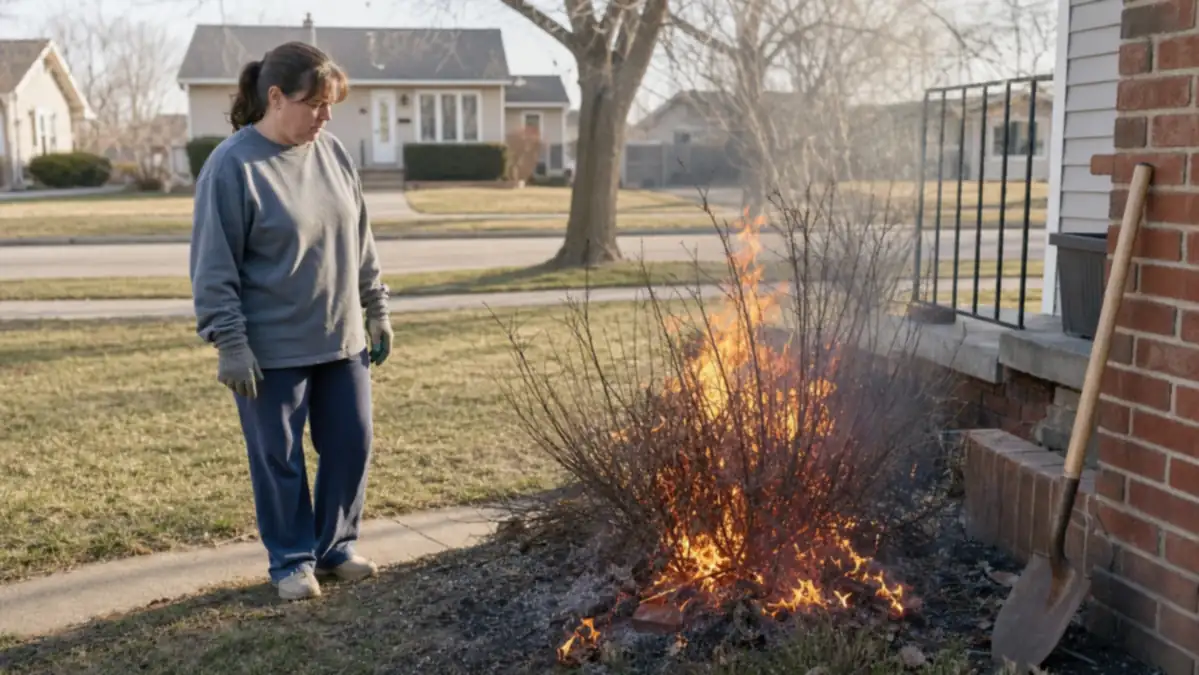
The burning bush by my porch steps had been dying slowly for two winters before it finally gave up for good. No leaves, no color, just a gray tangle of bare stems where there used to be a nice burst of red every October. I let it sit through most of one spring telling myself I'd get to it, and then in early June I finally decided this was the weekend. I had no idea a single stubborn root ball was going to eat two whole Saturdays before a serrated shovel called the Root Slayer put an end to it in about fifteen minutes.
That shrub had been in the ground almost nine years, planted the same summer we redid the porch steps. It never gave me any trouble growing, and I figured pulling it out would be about the same as any other shrub I'd removed. I was wrong about that in a way that took most of a weekend to understand.
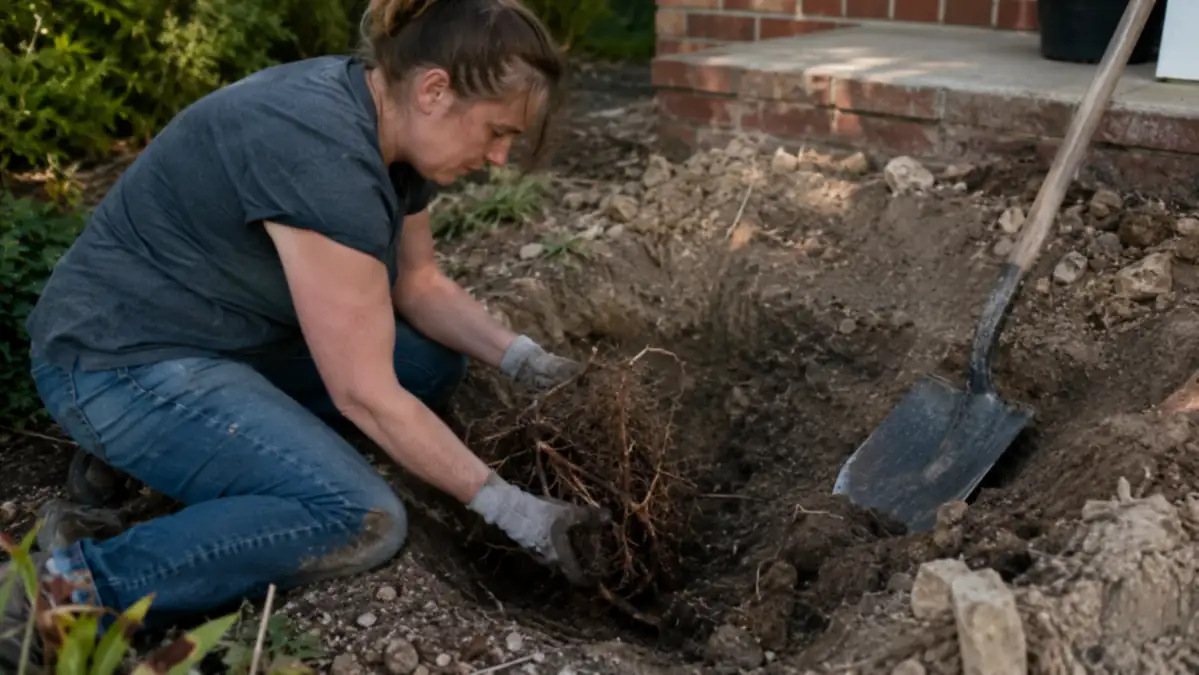
I started with my old flat-blade spade, the one I use for edging beds and turning the vegetable patch every spring. I got the first ring of soil out fine, loose and easy. Then the spade hit something and just stopped, like I'd driven it into a curb. I tried a different angle. Same thing. I got down on my knees and pulled soil away by hand and found out why. There wasn't one root under that shrub, there was a woven mat of them, thick as my thumb in places, running out in every direction like spokes on a wheel.
I'll be honest about how bad that first afternoon went. I chopped at the mat with the flat spade and mostly just bruised my palms every time the blade bounced off. I switched to a hand pruning saw and got through maybe three roots in forty minutes, sweating through my shirt. By the time I quit for the day I had a hole about a foot deep, a root ball that hadn't budged, and a sore lower back I felt the whole next morning.
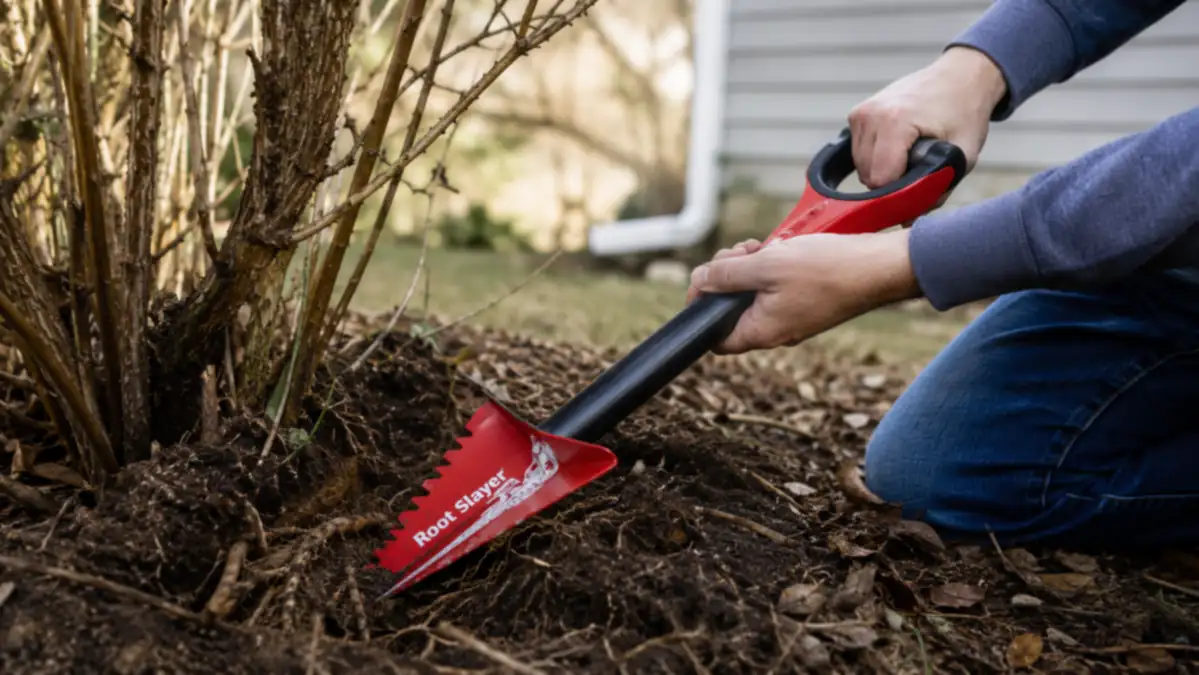
That night I looked up what people actually use for this, because my flat spade clearly wasn't built for cutting, only for scooping and edging. That's how I landed on the Root Slayer, a garden shovel with a serrated blade along one edge, made specifically to saw through roots instead of bouncing off them. It looked almost like a big steak knife welded onto a shovel head, a little over the top for a backyard job, but at that point I was ready to try almost anything.
The serrated edge walked straight through a root that had shrugged off twenty minutes of hand-saw work the day before.
Stop fighting roots with a shovel that isn't built to cut them
The Root Slayer's serrated edge is made to saw through roots on the way down, not bounce off them like a flat spade. If a stubborn stump or root ball is waiting on you, check today's price on Amazon before you plan another weekend around it.
Amazon Check Today's Price on Amazon →It showed up two days later and I went back at that root ball the following Saturday. The difference was obvious inside the first few minutes. Instead of skating off the roots, the serrated teeth caught and bit right in, and a short rocking motion with my weight behind it sawed straight through roots that had beaten me all day the weekend before. The thick root that ate forty minutes of hand-sawing came out in under two.
There was another surprise waiting deeper down. Whoever poured our porch steps decades before we bought the house had dumped leftover rubble and fist-sized rocks into that spot as fill, and the shrub's roots had grown right around a lot of it. I've dug in clay and I've dug in sandy soil in this yard, but roots wrapped around chunks of old concrete rubble was a new one. The pointed tip was narrow enough to work down between the rocks and roots without prying the whole mess loose in one piece, which is what my flat spade would have forced me to do.
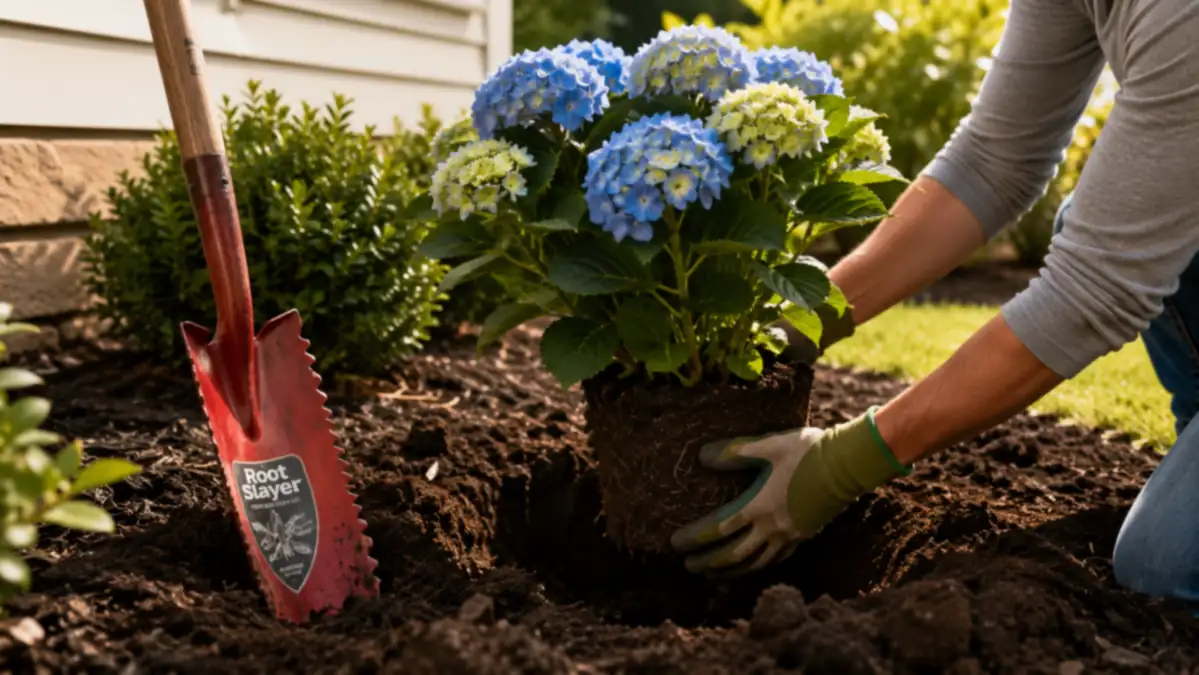
By the time I'd worked around the whole root ball, sawing through the thick radial roots one at a time and levering out the smaller ones, the entire thing came free with one solid pull. I stood there a second, honestly a little annoyed at how much easier that would have gone if I'd started with the right tool instead of stubbornly grinding through with the wrong one. If you want the full rundown of how it held up over a whole season of digging after that first job, I wrote it up in my long-term Root Slayer review, and if you're staring down your own dead shrub right now, I laid out the exact steps in how to remove stubborn roots with a serrated shovel.
A week later I had a young hydrangea sitting in that same spot, and every time I walk past it on the porch steps I think about how close I came to just paying someone to come dig that root ball out for me instead.
What I'd Tell You If We Were Sitting at My Kitchen Table
If you've got a dead shrub, an old stump, or a root system that's already beaten you once with a regular shovel, the Root Slayer is the tool I'd hand you first. Don't do what I did and burn a whole weekend proving a point to a piece of steel. A flat spade is a fine tool for turning soil and edging a bed, but it was never built to cut through roots, and no amount of stubbornness on your part changes that. A serrated blade does the cutting for you. It won't make the job effortless, digging out a root ball is still real work, but it turns a job that fights you for hours into one that's done before you've worked up a real sweat. That's really the whole story. Wrong tool, sore back, two lost Saturdays. Right tool, fifteen minutes, and a new hydrangea to show for it.
Don't let the next stubborn root ball win a second weekend in a row
Whatever you're up against, a dead shrub, an old stump, or roots tangled with rocks, a serrated blade saws through what a flat spade only bounces off of. Check today's price on Amazon and see if it's the tool that finally gets that spot cleared.
Amazon Check Today's Price on Amazon →