I've got a silver maple at the back corner of my property with roots that have quietly taken over half my planting bed, and for years my old flat spade did nothing but bounce off them. Every new shrub, every split perennial, turned into a wrestling match that usually ended with me on my knees hacking at a root with a hand pruner. I finally switched to a serrated shovel two seasons ago, and it changed how I think about digging near anything with roots. Here are ten specific reasons a serrated blade beats a plain spade the second roots enter the picture.
None of this is theoretical or pulled from a spec sheet. Every reason below is something I noticed with my own hands, digging holes in a bed that a silver maple has been quietly colonizing for longer than I've owned the house, plus a handful of jobs I did for my sister after her spade gave out on a hedge full of old roots.
Tired of your spade bouncing off every root in the way?
A serrated blade saws through roots that stop a flat spade cold. Check today's price on the Root Slayer shovel before your next planting job turns into a fight.
Amazon Check Today's Price on Amazon →It saws instead of bounces
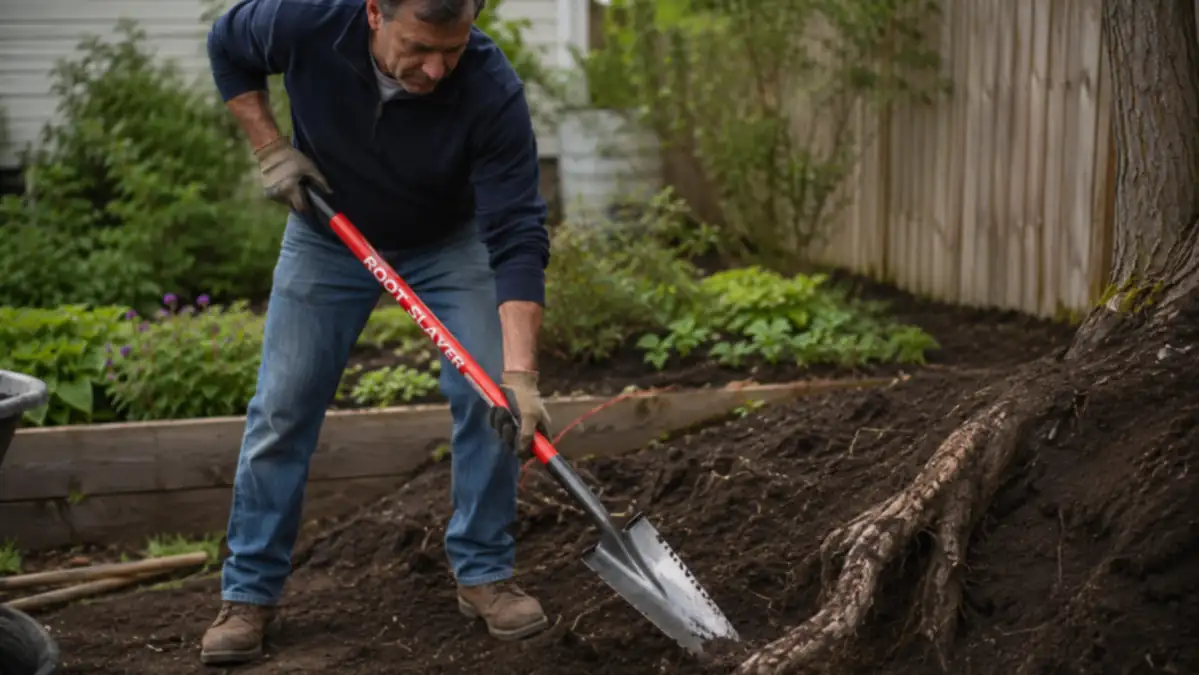
A flat spade edge meets a root and just slides off, especially on anything thicker than a pencil. The serrated teeth on the Root Slayer bite in on contact instead. I noticed this the first time I hit a wrist-thick root near the maple, my old spade would have needed three or four hard stomps just to dent it, and the serrated blade started cutting on the first push. That first cut told me more about this tool than any spec sheet could have.
Thin roots part cleanly without tearing
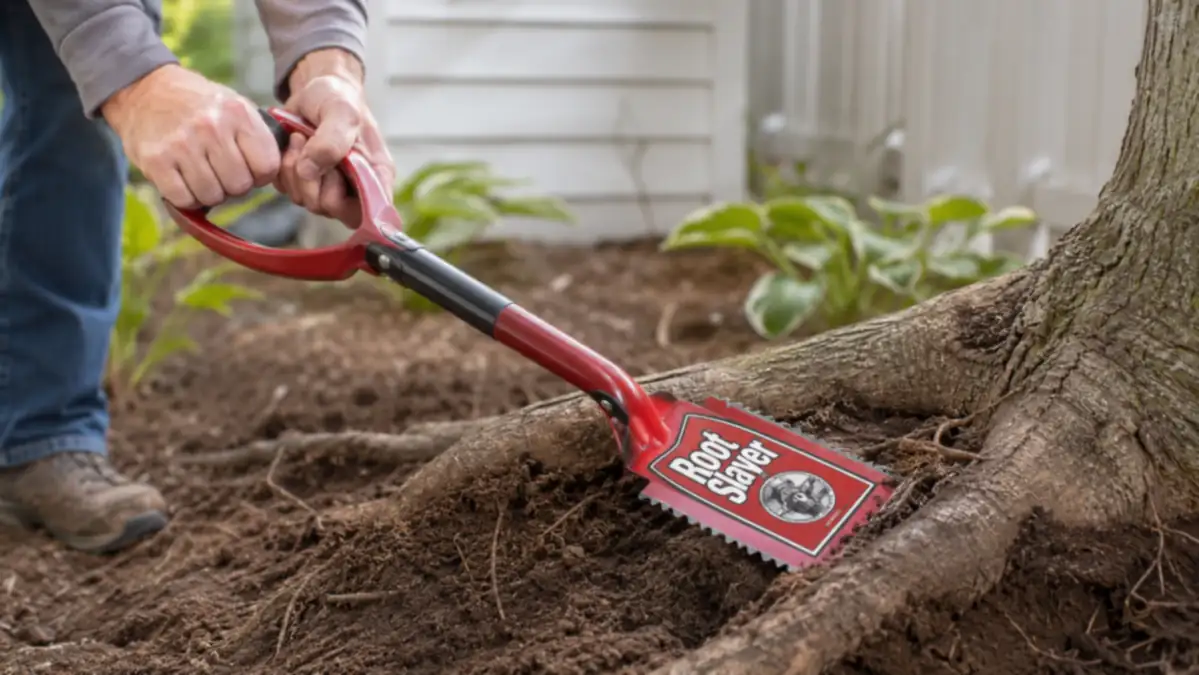
Anything under about half an inch parts almost like cutting rope with a knife once the teeth catch it. A flat spade tends to tear or shred a thin root instead of cutting it, which leaves ragged ends and can drag the whole root system sideways. Clean cuts matter more than people realize, a torn root heals worse and can stress the plant it's still attached to.
You stop reaching for a second tool mid-dig
Before this shovel, I'd hit a root, set the spade down, walk to the shed for loppers, cut the root, walk back, and pick the spade back up. On a bed full of surface roots that happened a dozen times in an afternoon. With the serrated edge built into the blade, the cutting tool is already in my hands. I finish a planting hole in one continuous motion instead of four separate trips. Over a full digging season that adds up to hours I got back just by not walking to the shed and back.
The pointed tip gets started where a flat edge can't
The Root Slayer's blade comes to a narrower, slightly concave point rather than a flat leading edge. That matters when you're trying to wedge a blade between two close roots without disturbing the bigger one you want to keep. My old spade would just skate across the surface in tight spots like that. The pointed tip finds a gap and starts cutting where a flat spade has nothing to grab onto.
A sawing motion works with less body weight than muscling through
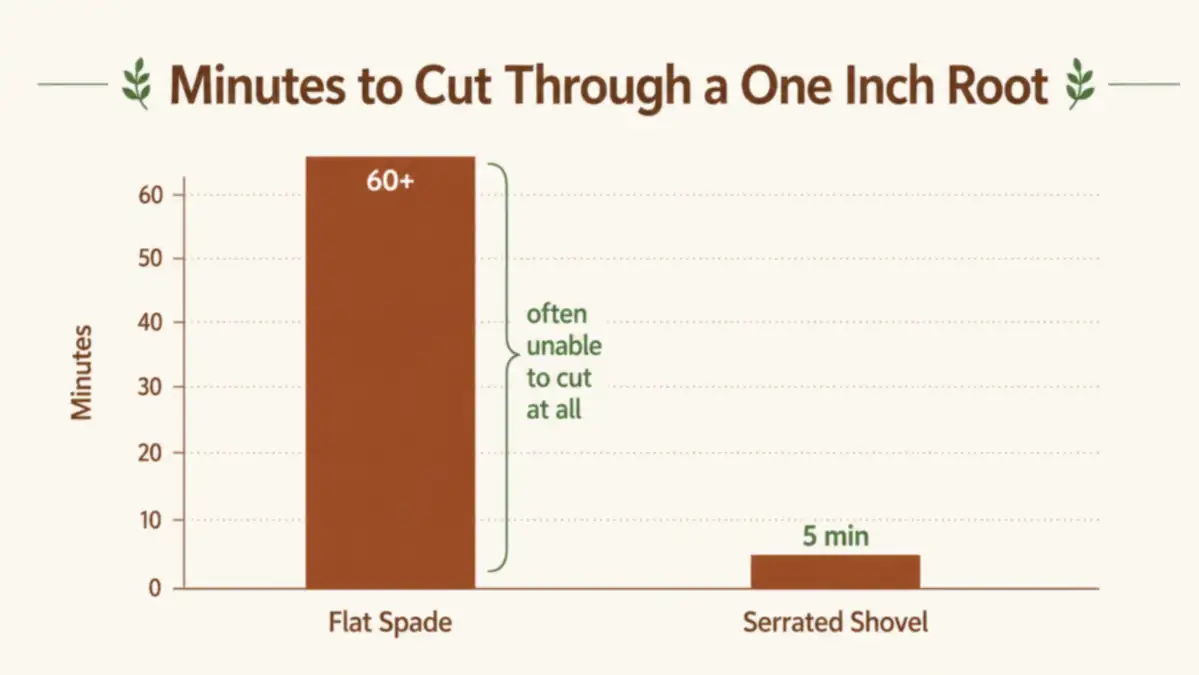
With a flat spade, cutting a root usually means jumping on the shoulder of the blade and hoping your body weight is enough. That's hard on a 61 year old back, and it doesn't always work anyway. The serrated edge lets me work the blade back and forth like a hand saw instead, which uses arm and shoulder motion rather than throwing my full weight down over and over.
It handles the surprise roots you didn't know were there
Half the roots I hit each season aren't near a known tree, they're old runners from a shrub removed years before I moved in, or a neighbor's tree crossing the property line underground. A flat spade turns every one of those surprises into a stop-and-fetch-loppers moment. A serrated shovel just keeps digging, root or no root, so I stopped dreading the unknown parts of the yard. That change alone made me more willing to start new beds in parts of the yard I used to avoid entirely.
Amazon Check today's price and stop dreading surprise roots →
The narrower blade cuts through clay-bound roots without the suction fight
My yard sits on heavy clay, and a wide flat spade creates a wet sucking resistance every time you try to pull it back out near a root. The Root Slayer's blade is narrower and more pointed, so there's less surface area fighting that suction. On my worst clay days it came out of the ground cleaner, with the root already cut, instead of coming out half stuck with the root still intact.
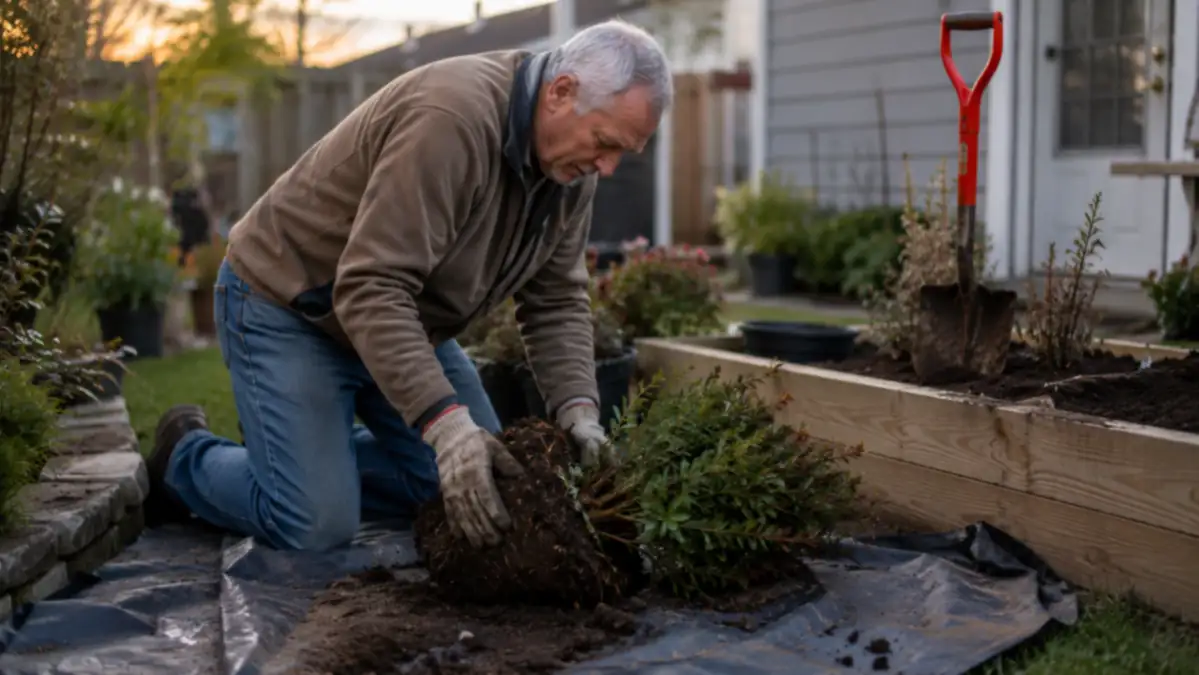
Digging out a whole shrub goes faster, not just easier
When I moved an overgrown forsythia to the side yard, the root ball was laced with its own roots plus a few from a nearby hedge. A flat spade would have meant circling the plant, hitting a root, stopping, cutting it separately, and circling again. With the serrated blade I worked around the whole root ball in one pass, sawing through roots as I hit them, and had the shrub out in under twenty minutes.
The built-in foot step gives you leverage a saw alone doesn't
A hand saw or root saw cuts well but gives you nothing to push against when you also need to break through the soil around a root. The Root Slayer has a foot step built into the top of the blade, so I can drive it down into hard, dry ground with my boot and still get the sawing motion on the root itself. It does both jobs a separate saw can't do alone. On hard, dry ground late in summer, that combination of push and saw is what actually gets a hole started.
It keeps holding an edge after hitting rock and debris
I expected the teeth to dull fast, they look thin up close, but after a full season of hitting roots, buried rock, and some old construction debris in one bed, the serrated edge kept biting into new roots without needing a sharpening. That durability is the difference between a tool you reach for every time and one you retire to the back of the shed after one rough season.
What I'd Skip
A serrated shovel isn't the right tool for every dig. If your soil is soft, loamy, and mostly free of roots, a lighter standard spade moves more soil per scoop and will tire your arms less over a big project. It's also not a substitute for loppers or a pruning saw on roots over two inches thick, those still take real sawing time and patience even with serrated teeth. And if you rarely dig anywhere near a tree or old shrub line, you may not need the extra weight this style of blade carries. For a full walkthrough of technique on the toughest roots, see my guide on removing stubborn roots with a serrated shovel. It's also heavier in the hand than a basic spade, so if you're doing a lot of open digging with nothing underground to fight, the extra weight is a cost with no real payoff.
A flat spade bounces off a root. A serrated blade saws through it. Once you've dug with both near a mature tree, you don't go back.
Stop bouncing off every root in your beds
If your spade keeps stopping cold the second it hits a root, check the current price on the Root Slayer serrated shovel on Amazon and see how much faster the next dig goes.
Amazon Check Today's Price on Amazon →