
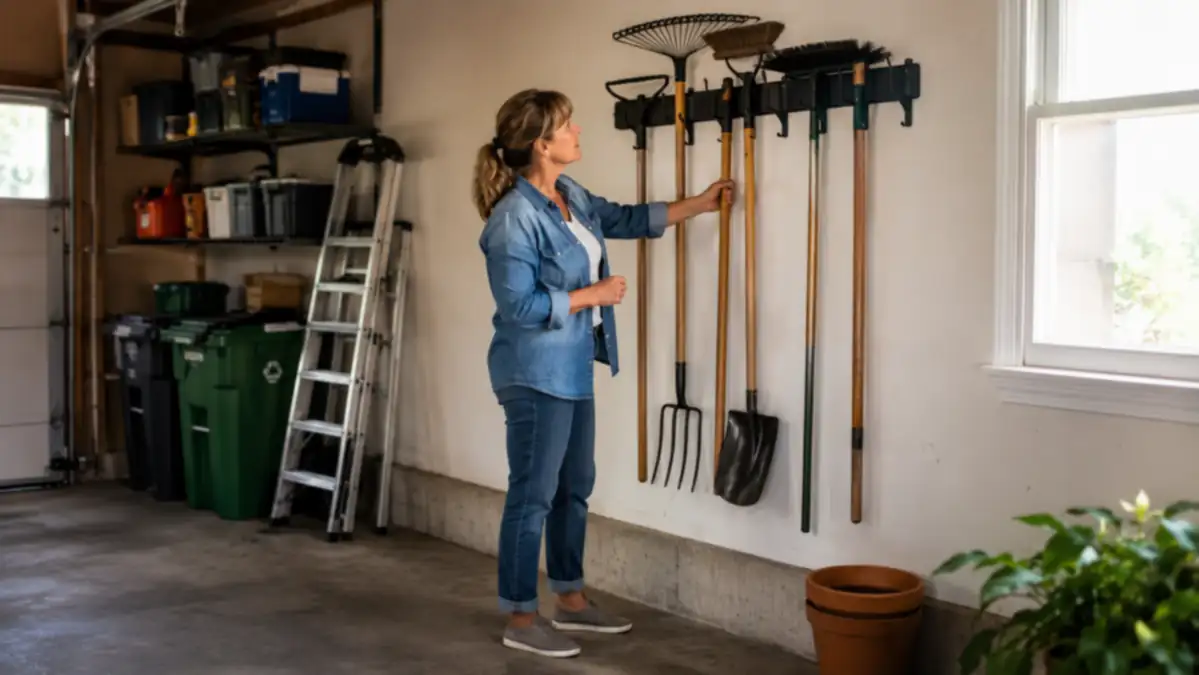
Short version: if you've got even four feet of garage or shed wall you can spare, the StoreYourBoard wall-mount tool rack beats a freestanding tool caddy for most people reading this. I moved my long-handled tools off the floor and onto one of these racks two summers ago after tripping over a rake in the dark one too many times, and I haven't gone back to a caddy since. A freestanding caddy really only earns its keep if you genuinely can't put a hole in the wall, or you need to wheel your tools out to a garden bed that's a good walk from the garage.
I'll go through what actually changes day to day, not just the numbers on the box. Floor space, how many tools each one really holds once you load it with real gear instead of the three tools shown in the product photo, how stable each one stays when a kid or a dog brushes past it, what setup actually involves on a Saturday morning, and what each looks like in your garage after a full season of actual use, not the first tidy week when everything's still new.
I've owned both, which is part of why I feel comfortable being blunt about it. The caddy came first, bought in a hurry the week we moved into this house, back when the garage was still full of unpacked boxes and I just wanted the rake and shovel somewhere other than the floor. The wall rack came about a year later, once I'd lived with the caddy long enough to know exactly where it fell short.
| Spec | StoreYourBoard Wall-Mount Rack | Typical Freestanding Tool Caddy |
|---|---|---|
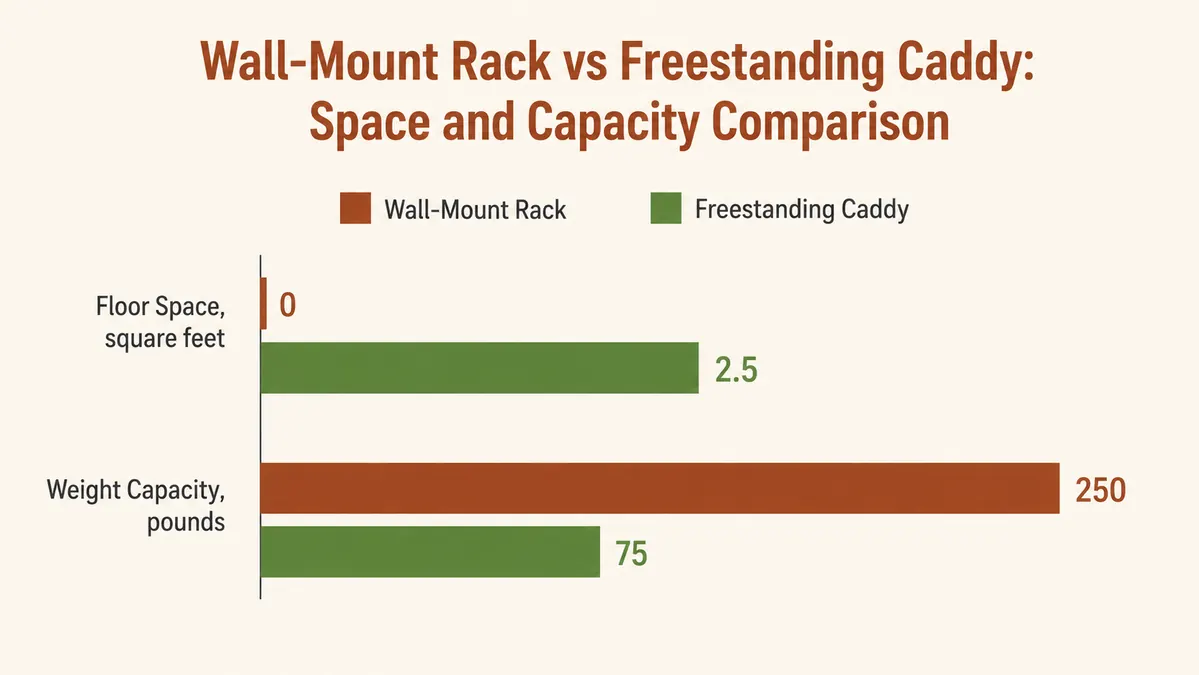
| Floor footprint | None, mounts flat to the wall | About 2 to 3 sq ft of floor space |
| Weight capacity | Holds up to 250 lbs across 36 inches of rubber-coated hooks | Usually 10 to 15 tool slots, weight limit depends on leg strength |
| Stability | Bolted into wall studs, doesn't shift | Can tip if bumped or loaded unevenly on one side |
| Mobility | Fixed in one spot on the wall | Rolls or carries to wherever you're working |
| Setup | Screw into studs with a level, about 20 minutes | Unfold or assemble, ready in a few minutes |
| What it fits well | Shovels, rakes, hoes, hoses, edgers, long-handled tools | Hand tools, small pruners, gloves, shorter items |
| Wear over time | No moving parts, hooks stay put | Wheels and joints can loosen or squeak after a couple seasons |
| Renter friendly | Needs a drill and stud anchors | No drilling, moves with you |
| Best for | Garages and sheds, anyone tired of tripping over tools | Renters who can't drill walls, or tools you carry across a yard |
Where the Wall-Mount Rack Wins
The floor space is the part you feel first, before you've even hung a single tool. My shed is a fairly standard 10 by 12, and before I put the StoreYourBoard rack up, every long-handled tool I owned, the shovel, the flat spade, the rake, the hoe, leaned against the same corner in a pile that fell over if you looked at it wrong. Getting to the lawnmower meant stepping over a rake handle and hoping nothing else came down with it. Once the rack went up on the back wall, that whole corner of floor came back. I can walk a straight line from the door to the mower now, which sounds like a small thing until you've actually caught a rake handle across the shin at seven in the morning before coffee.
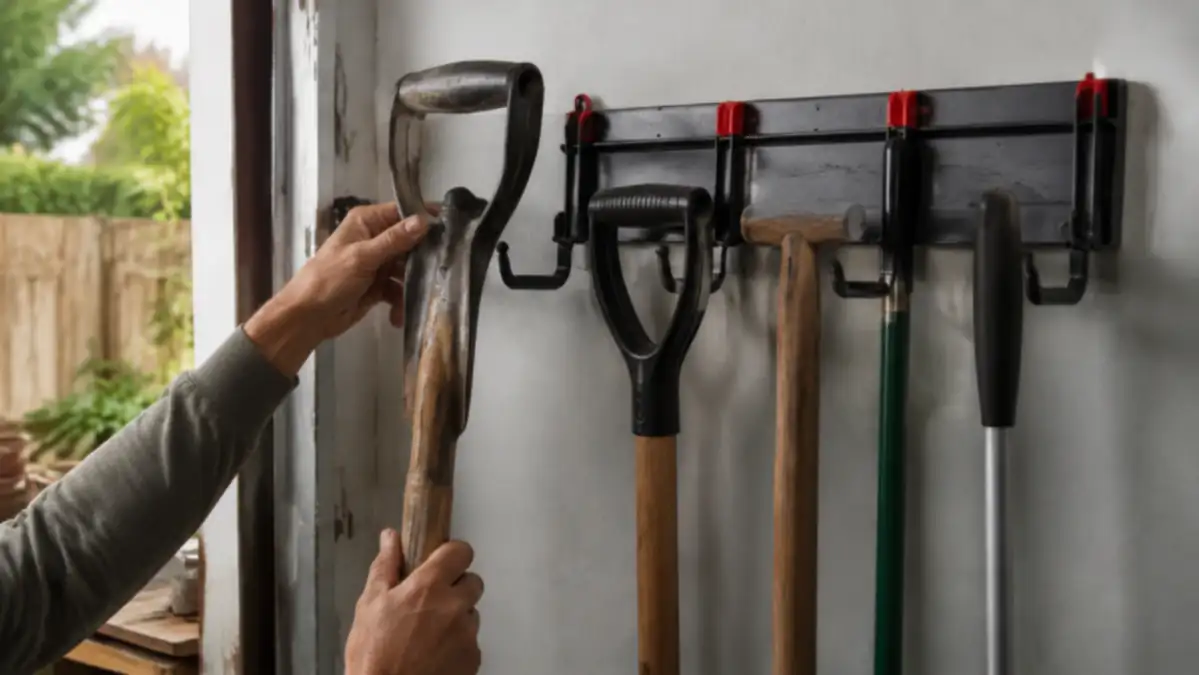
Capacity surprised me too. The 36 inch rail is rated to 250 pounds, and I've got the shovel, a flat spade, a bow rake, a hoe, a string trimmer, and a coiled hose all hanging on their own rubber-coated hooks with room left for one more tool if I ever buy it. Nothing touches, nothing has to be pulled out from under something else to get to it, and the rubber coating on the hooks means the handles don't slide off or scuff up over a season the way they can on a bare metal hook. For a full rundown of how it's held up after six months of daily grabbing and hanging, my long-term review covers the wear in more detail.
Get your tools off the floor for good
The StoreYourBoard rack mounts flat to the wall and holds up to 250 lbs across rubber-coated hooks. Check today's price and current rating on Amazon.
Amazon Check Today's Price on Amazon →Stability is the other thing I didn't fully appreciate until I'd lived with it a while. Because it's screwed into the studs, the rack does not move. My dog has run into that wall chasing a tennis ball more than once, and nothing has ever come loose or shifted a hook. Compare that to the caddy I used before, which tipped over any time it got bumped from the side, usually spilling a hand pruner or a trowel under the workbench where I'd find it three weeks later covered in dust and cobwebs.
Where a Freestanding Caddy Wins
I want to be fair to the caddy, because it does solve a real problem for some people. If you rent and your lease says no holes in the wall, or you live somewhere without a garage stud you can actually anchor into, a caddy is the honest answer. It also moves. If you're working a garden bed that's a hike from the garage, you can wheel a loaded caddy right up to where you're planting instead of making four trips back and forth for a trowel, a hand fork, and gloves you forgot the first time and had to go back for anyway.
Small hand tools also fit a caddy better than they fit a hook rack. Trowels, hand pruners, a soil knife, seed packets, gloves, that kind of gear tucks into a caddy's little bins and pockets in a way that doesn't work on a rail meant for long handles. If most of what you own is hand tools rather than long-handled ones, the caddy's slot layout is honestly a better match, and pairing a small caddy for hand tools with a wall rack for the long-handled stuff is a setup I've seen work well for people with more elaborate garden routines than mine, especially anyone with raised beds spread across a bigger yard.
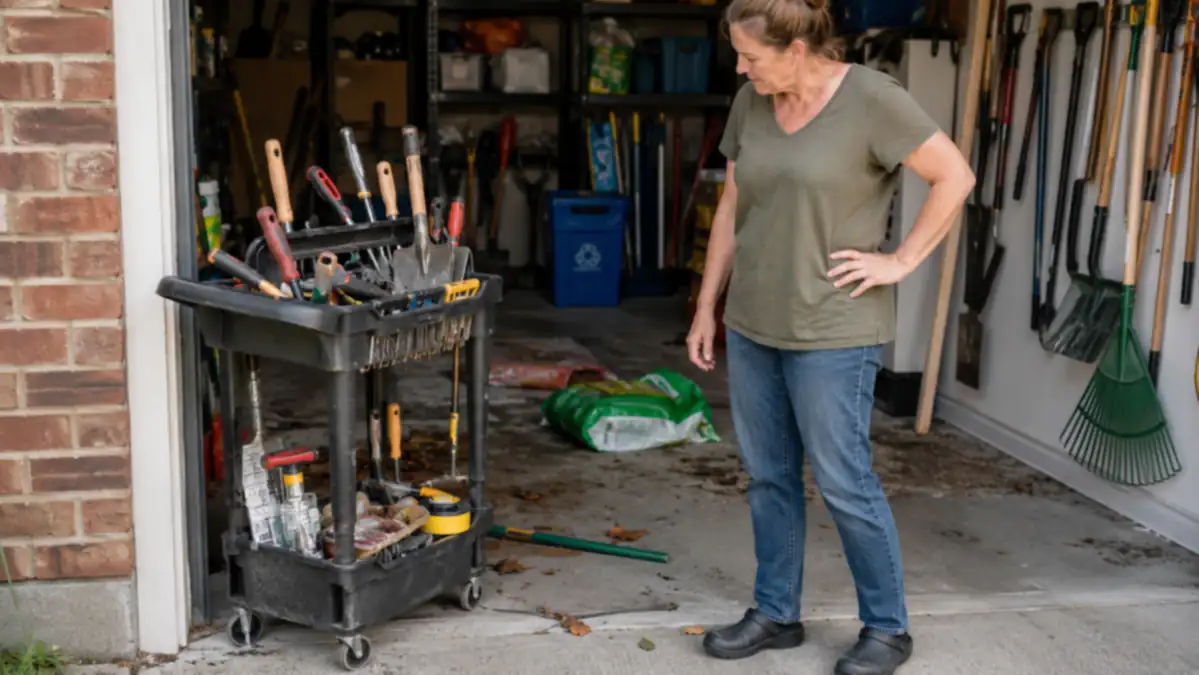
The caddy I owned before this looked tidy in the store aisle. In my garage, it tipped over twice in the first month, once when the dog's tail caught it on the way past.
The Floor Space Math Nobody Runs at the Store
Here's the math I wish someone had walked me through before I bought my first caddy. A loaded caddy takes up roughly 2 to 3 square feet of floor, and that's floor space you can't use for the car, the lawnmower, the trash cans, or a workbench. In a one-car garage that's already tight with a car in it, that 2 to 3 square feet is not nothing, it's the difference between opening your car door all the way and having to slide out sideways every single time you park. The wall rack uses zero floor space. It hangs above eye level on a stretch of wall that was doing nothing anyway, which is real square footage you get back without moving a single other thing in the garage or shed.
It adds up over a whole garage too. Once I got the long-handled tools off the floor, I also had room to add a small shelf for potting soil bags that used to sit wherever there was a gap between the mower and the wall. None of that would have been possible with a caddy still parked in the corner, because the caddy itself was the thing eating the gap in the first place, and one piece of clutter has a way of inviting more clutter to pile up right next to it.
Where the Wall-Mount Rack Falls Short
I'm not going to pretend the rack is perfect for every situation, because it isn't. You need a drill, a stud finder, and about twenty minutes to get it mounted level and secure, which is more upfront effort than unfolding a caddy and calling it done. If you're renting and can't put screws in the wall, this option is off the table entirely no matter how much better it works for people who own their place. And once it's mounted, it's mounted. You're not moving it to a different wall on a whim the way you'd wheel a caddy to a new corner if the layout of your garage changes. Short-handled tools like trowels and hand pruners also don't hang well on a rail built for long handles, so you'll still want a small bin or drawer nearby for those.
What I Wish I'd Known Before I Drilled
The stud finder is not optional, and I learned that the hard way on the first attempt. I eyeballed where I thought a stud was on the shed wall, drove the first anchor in, and felt it wobble the second I hung the shovel on it. Drywall anchors alone will not hold a loaded 36 inch rail with a shovel, a rake, and a hose on it, not for long. Once I actually ran a cheap stud finder across the wall, found the real framing, and moved the rack over about eight inches, it went up solid and hasn't budged since. If your shed or garage has exposed studs instead of finished drywall, this step is even easier, since you can usually see or tap out where the framing runs.
The other thing worth knowing before you start is that a level matters more than it seems like it should. My first attempt was mounted maybe a quarter inch off level across the 36 inches, barely visible to the eye, but enough that a couple of the heavier tools drifted toward one end of the rail over a few weeks and started crowding each other. Twenty extra seconds with a level before you drive the last screw saves you from redoing it later, and it's the kind of small thing that's easy to skip when you're eager to just get the tools up and out of the way.
Who Should Buy the Wall-Mount Rack
If you own your home, or your landlord doesn't mind a few screw holes in the garage wall, and your tools are mostly long-handled, shovels, rakes, hoes, edgers, hoses, the wall-mount rack is the practical buy. You'll free up real floor space, everything stays put no matter how many times the door slams or the dog runs through, and you'll actually be able to see what you own instead of digging through a pile in the corner every time you need something. For the two things I'd have done differently on install day, my honest review covers the small mistakes that cost me an extra trip to the hardware store.
Who Should Buy a Freestanding Caddy
If you rent and can't drill into the wall, or you mostly work a garden bed far from the garage and need your hand tools to travel with you, a caddy is the more honest fit. Just plan on giving up a couple square feet of floor for it, and expect to steady it now and then if a kid or a pet clips it going by, because that's the tradeoff you're making for the mobility. A lot of people I've talked to over the fence end up owning both eventually, a wall rack for the long-handled tools that live in the garage and a small caddy just for the hand tools that come out to the beds.
Stop tripping over tools that belong on a wall
The StoreYourBoard rack clears your floor and keeps every long-handled tool exactly where you left it. See the current price and rating on Amazon.
Amazon Check Today's Price on Amazon →