

Every photo on the CKLT lawn edger's Amazon listing shows the half-moon blade gliding through turf like it's cutting warm butter. Mine did not glide through anything the first afternoon I used it. I set the blade against the edge of a garden bed, stepped onto the footplate, and got a dull, resistant thud instead of the clean bite I expected. I checked the edge with my thumb the way you'd check a kitchen knife, and sure enough, it was noticeably duller than a tool at this price has any business being straight out of the box.
That's the thing nobody puts in the product description. I've now spent about two months with the CKLT edger, testing it on three different jobs around my yard, and this review is going to lead with the parts the glossy photos leave out rather than burying them halfway down the page. If you've read a review that made this sound effortless, I'd take it with a grain of salt. It's a decent tool. It's also not the tool the listing photos are selling you.
The Quick Verdict
A capable, honestly priced edger that needs a file and a little patience before it earns its keep, don't expect the effortless glide the photos promise.
Amazon Check Today's Price →Thinking about a manual edger but tired of reviews that only tell you the good parts?
The CKLT edger's tempered steel blade does cut a clean line once it's actually sharp, and once you know what soil it likes. Check today's price on Amazon and read the rest of this review before you decide if the tradeoffs work for your yard.
Amazon Check Today's Price on Amazon →What the Listing Doesn't Show You
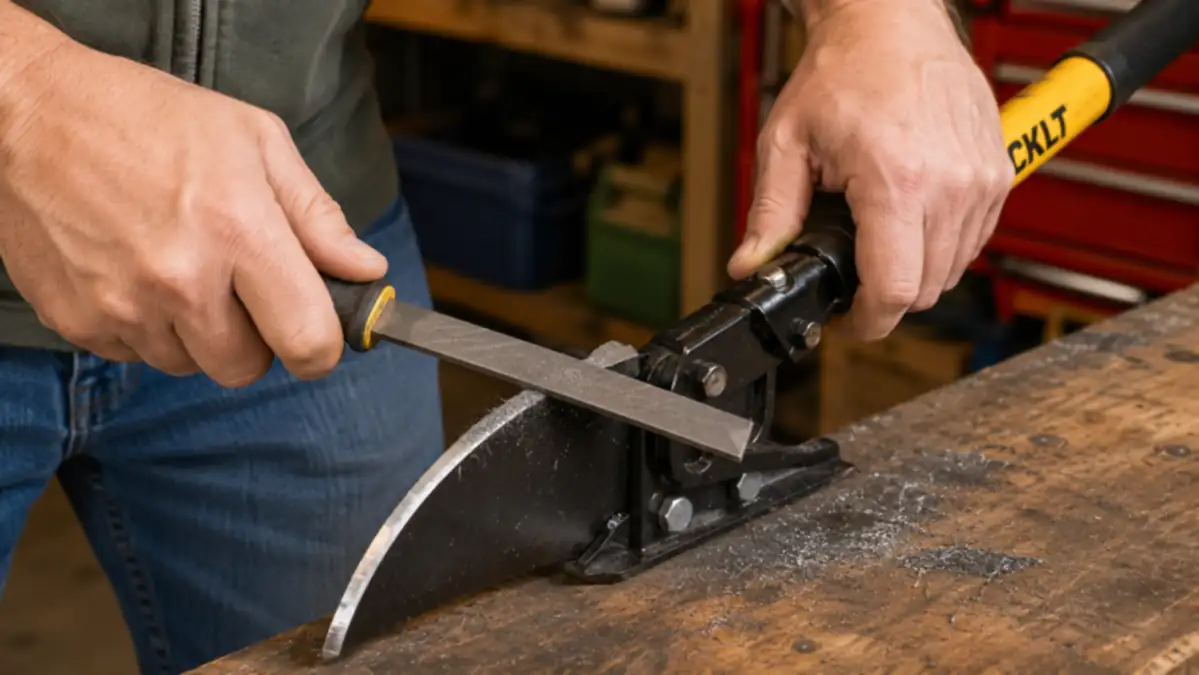
First, the blade sharpness. Mine arrived with an edge that could catch on a paper towel but wouldn't slice through it cleanly, which is not the same as sharp. I ended up running a flat mill file along the bevel, about fifteen strokes on each side, before I trusted it on anything tougher than loose mulch. That's a fifteen minute job once you know how to do it, but it's not mentioned anywhere on the listing, and if you've never sharpened a garden tool before, it's an unpleasant surprise to discover you need to before your new edger works the way the box implies it will.
Second, the weight distribution. On paper this edger isn't heavy, but almost all of that weight sits at the blade end, and swinging it feels noticeably top heavy compared to a garden spade of similar overall weight. My forearm was tired after twenty minutes in a way it usually isn't with hand tools, and it took me a session or two to adjust my grip and stance to compensate. Nothing about the product photos hints at that top heavy feel, since a still photo can't show you how a tool swings.
Third, there's no cover or sheath for the blade anywhere in the box. A tempered steel half-moon edge that sharp sitting loose in a garage is a real hazard, especially with a dog and grandkids who occasionally wander through. I ended up cutting an old bike inner tube and wrapping it around the blade for storage, which works fine, but it's a fix I had to come up with myself rather than something the manufacturer thought to include.
Fourth, and this one's minor but real, it's louder in use than I expected from a tool with no motor. Every time the blade hits a buried root or a bit of gravel, there's a sharp metallic clang that carries. My neighbor two houses down asked what I was doing out there banging on something. It's not a dealbreaker, just another detail the quiet, staged product photos don't prepare you for.
How I Actually Tested This One
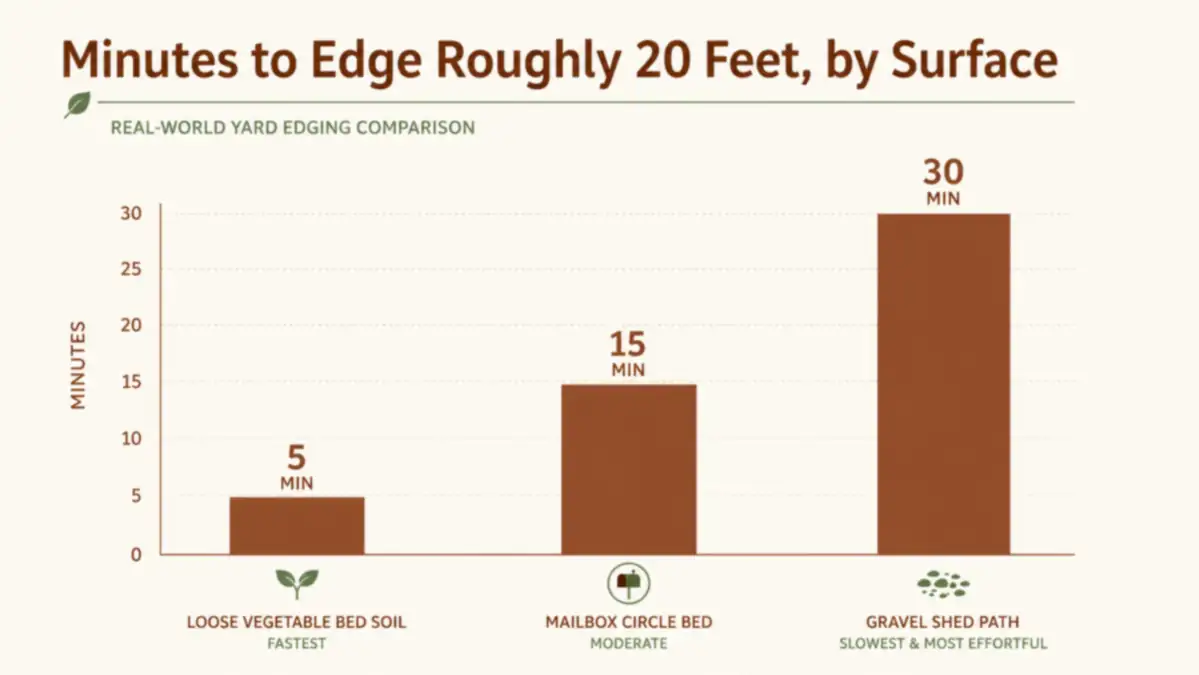
I picked this edger up in early April and used it on three specific jobs over the following two months, deliberately different from each other so I could see where it earned its keep and where it didn't. The first was a straight sixteen foot border along my raised vegetable garden bed, freshly tilled soil on one side and mulch on the other. The second was a small circular flower bed ringing the mailbox post, maybe four feet across, with a tight curve the whole way around. The third was a twenty eight foot stretch along the gravel path leading to my shed, where the edge between grass and gravel had gotten shaggy and uneven.
The vegetable garden bed was the easiest of the three by a wide margin. Once I'd filed the blade, it sank into that loose, recently worked soil almost effortlessly, and I had a crisp, straight sixteen foot line in about eight minutes with almost no resistance. If every job looked like this one, I'd have nothing but good things to say about the CKLT edger.
Timing mattered more than I expected too. I redid a short stretch of the mailbox bed twice, once on a dry, sunny Saturday and once the morning after a decent rain, just to see if the difference was real or in my head. It was real. The post rain pass took noticeably less effort and left a cleaner edge, which lines up with what I'd guess about any blade working against dry, compacted ground versus softened ground. Nobody tells you to check the weather before you edge, but it's probably the single easiest thing you can do to make this tool work better.
The mailbox bed and the gravel path told a very different story, and that's really the point of this review. A tool review that only shows you the easy job isn't telling you the whole truth, so let's get into where this thing actually struggled.
Where the Blade Actually Struggled
The gravel path was the roughest test by far. The subbase under that gravel edge has years of compacted crushed stone mixed into the soil, and every time the blade hit a buried piece of gravel, it sent a hard jolt straight up through my wrist and elbow. It wasn't like the smooth resistance of dense clay, it was a sharp, jarring stop and start, the kind of vibration that leaves your hand a little numb after twenty minutes. That twenty eight foot stretch took me nearly forty minutes, and I had to stop three times to shake out my hand. This is not a tool built for gravel adjacent edges, full stop, and I wish the listing had said so somewhere.
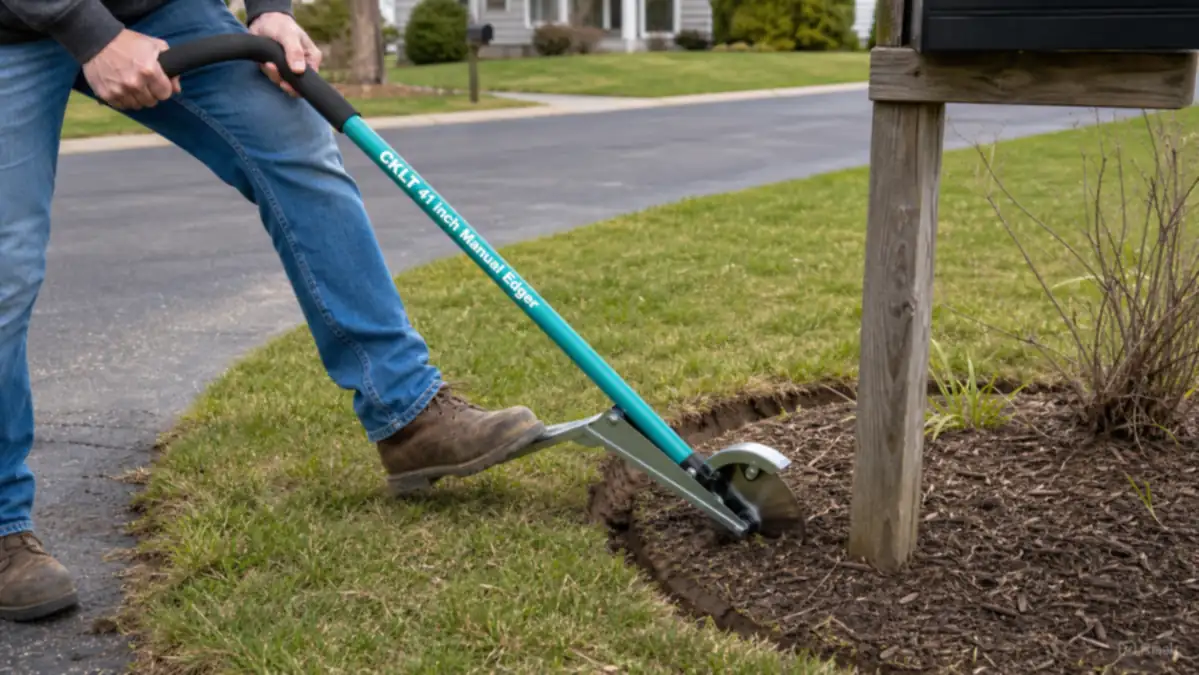
The mailbox bed exposed a different weakness. The blade on this edger is wide and mostly straight across, which is great for a long clean line and genuinely bad for a tight radius. Trying to follow that four foot circle meant I couldn't rock the blade forward the normal way, I had to work it in short, choppy stabbing motions, resetting every three or four inches. The result was a line that's more scalloped than smooth, small flat facets instead of one clean curve. It's not terrible from a normal viewing distance, but up close you can tell it wasn't cut in one continuous motion, and no amount of technique on my part fully solved that. If your yard has a lot of round beds or tight curves, this blade shape works against you.
What I Used Before This
For years before I bought the CKLT edger, I got by with an old pair of long handled border shears and, honestly, a flathead spade I'd sharpen with a bench grinder once a season. The shears were fine for touch ups but useless for a real overgrown edge, and the spade left a ragged, uneven cut that never looked as crisp as I wanted, no matter how careful I was. Neither of them cost much more than this edger does, and neither ever gave me a line I was proud of.
Compared to that old spade, the CKLT edger is a clear step up on the jobs it's suited for, straighter lines, less ragged tearing, faster work in loose soil. It's not a step up on gravel, and it's not really better than the shears for tight curves, it's just different, with its own tradeoffs. I think that's the honest way to frame it. This isn't a tool that replaces everything I owned before, it replaces the flathead spade for straight borders and leaves the rest of the job to whatever else is already in the shed.
The Parts That Genuinely Surprised Me
I want to be fair here, because after that gravel path session I was ready to write this thing off entirely, and I don't think that would be an honest verdict either. Once I went back to straight borders in worked soil, like the vegetable bed, it did exactly what I'd hoped when I bought it. Clean, straight, satisfying line, minimal effort, done before I'd even worked up a sweat. That's the job this edger was actually built for, and on that job it delivers.
The rubber handle held up better than I expected too, even through the rough gravel session. No blistering, no raw spots on my palms, which surprised me given how much vibration was coming through it. And for what this costs, having a rustproof manganese steel blade that takes a file well and holds that edge for several sessions is genuinely more than I expected. I've owned cheaper edging tools that bent or chipped within a season. This one, once properly sharpened, has stayed usable.
I'll also say the learning curve is real but short. My first session was frustrating because I assumed it would work straight out of the box the way the photos imply. Once I understood it needed a file first and does its best work on straight lines in loose or moderately firm soil, my expectations lined up with reality and my frustration mostly disappeared.
Sharpening, Storage, and the Other Stuff Nobody Mentions
Plan on sharpening this blade with a basic flat mill file every few uses, not just once out of the box. I've done it three times now over the two months, roughly ten to fifteen strokes per side, checking the edge against a scrap of cardboard until it slices cleanly instead of tearing. It's not difficult once you've done it, but it is ongoing maintenance that a lot of buyers won't expect from a tool marketed as ready to use.
For storage, I'd skip hanging it loose on a nail the way I initially did, since the exposed edge is a genuine snag hazard walking past it in a dim garage. The homemade bike inner tube sheath solved that for me, and it has stayed rust free hanging that way even through a couple of humid weeks.
If you want the fuller picture on how this same edger holds up over a longer stretch of time, I put together a season long account of it over here, a full season of cutting clean border lines by hand. And if that gravel path story above has you leaning toward something powered instead, I laid out a direct comparison in the CKLT edger versus an electric edger, weighing effort against convenience for both. As always, don't fixate on the number on the price tag by itself, check today's price on Amazon and weigh it against what a powered alternative would run you.
What I Liked
- Sharpens up nicely with a basic flat mill file and holds that edge for several sessions
- Cuts a clean, fast line in loose or freshly worked soil like a vegetable bed border
- Rubber handle stayed comfortable even through a rough, vibration heavy gravel path session
- Rustproof manganese steel blade, no assembly beyond attaching the handle
- Reasonably built for the category once you know what job to point it at
Where It Falls Short
- Ships noticeably duller than the listing photos suggest, plan on filing it before first use
- No blade cover included, the exposed edge is a real hazard in storage
- Struggles badly and jars your wrist on gravel adjacent or rocky subbase
- Wide, mostly straight blade makes tight curves and small circle beds choppy and scalloped
- Top heavy swing tires the forearm faster than a comparable garden spade
The listing photos show it gliding through turf. Mine needed a file, a homemade bike inner tube sheath, and a little patience before it ever glided through anything.
Who This Is For
If most of your edging is straight or gently angled borders in soil that isn't packed with gravel, a walkway edge, a rectangular garden bed, a fence line, and you don't mind spending fifteen minutes with a file every few uses, this edger genuinely does a good job for what it costs. It also suits anyone who already owns a file or a grinder and doesn't mind treating a new tool like something to tune up rather than something that arrives finished. It rewards a little upfront patience and punishes the assumption that it'll work perfectly the moment it's out of the box.
Who Should Skip It
If your edging runs along a gravel driveway or path, or your yard has a lot of tight curves and circular beds like mine around the mailbox, I'd think hard before relying on this as your only tool. The vibration on gravel subbase is genuinely uncomfortable, and the scalloped result on tight curves isn't going to satisfy anyone chasing a magazine perfect line. Anyone who wants a tool that performs exactly like the listing photos on day one, with zero maintenance, is also going to be disappointed. This one asks a little of you before it gives much back.
Willing to sharpen it once and stick to straighter borders?
Once the blade is actually sharp, the CKLT edger does a genuinely clean job on loose or moderately firm soil, no cord, no gas, no battery. Check today's price on Amazon and decide if the honest tradeoffs above work for your yard.
Amazon Check Today's Price on Amazon →