
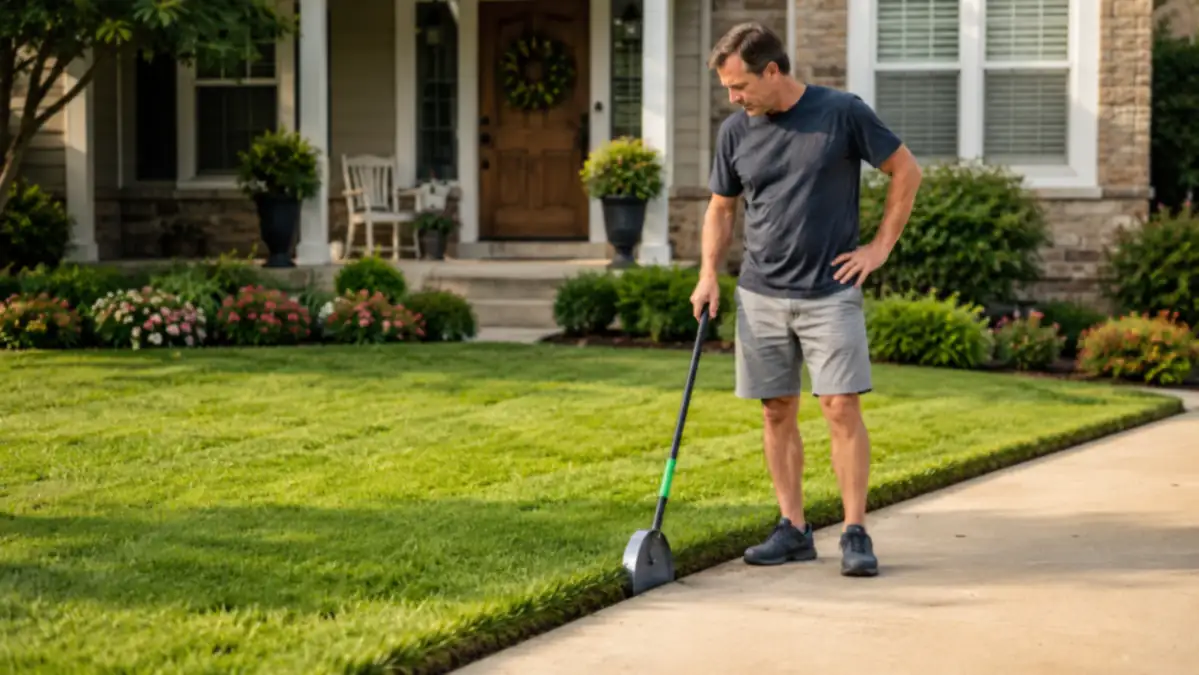
The border between my front lawn and the walkway had gone soft and shaggy for two summers running. Grass crept over the concrete, the line between lawn and mulch bed blurred into a fuzzy mess, and every time I mowed I told myself I'd deal with the edges properly next weekend. Last April I finally bought the CKLT manual lawn edger, the one with the long rubber handle and the half-moon tempered steel blade, mostly because it was the cheapest way to try fixing the problem without buying a powered tool I wasn't sure I'd use more than twice a year.
I want to be upfront before we get into it. This is a foot-powered tool, not an electric or gas edger. You supply the force. I've now used it through a full season on that front walkway, the curved border around two garden beds, and a stretch of driveway edge that turned out to be the hardest test of all. This review is my honest accounting of what worked, what took more out of my knees than I expected, and where I think it earns its keep.
The Quick Verdict
A genuinely sharp blade that cuts a clean line in decent soil, but it's real physical work, and it struggled more than I hoped on compacted ground near the driveway.
Amazon Check Today's Price →Tired of a fuzzy, overgrown line where your lawn meets the walkway?
The CKLT edger's tempered steel blade cut a straight, clean border along my front walk in about twenty minutes, no cord, no gas, no trip to the shed for a battery. Check today's price on Amazon before you spend another weekend staring at a shaggy edge.
Amazon Check Today's Price on Amazon →How I've Used It
I live on a corner lot with more edge to maintain than most of my neighbors, a front walkway, a curved bed along the porch, and a driveway border that runs almost sixty feet. Over the season I used the CKLT edger roughly every three to four weeks, more often in May and June when everything was growing fast, less in the dry stretch of late July when the grass practically stopped needing anything.
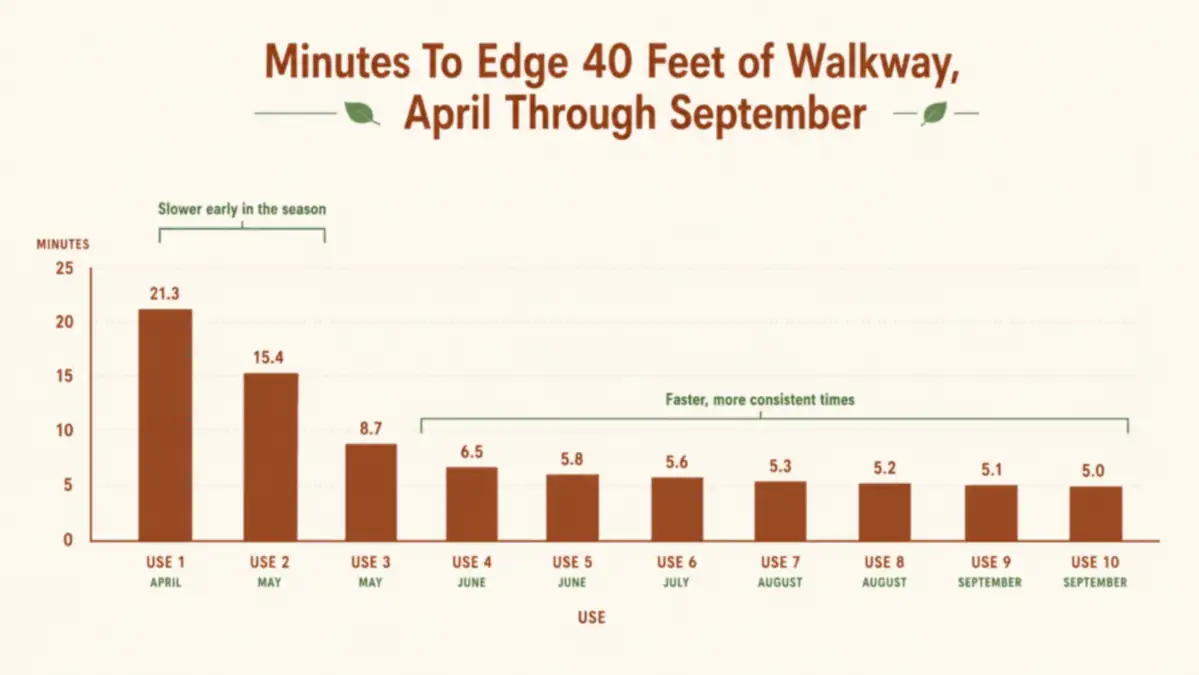
The first session was on the front walkway, forty feet of concrete with grass that had crept a good two to three inches over the edge in spots. I set the blade at the edge of the walk, stepped onto the footplate with my full weight, and rocked it forward the way the instructions showed. It bit into the turf better than I expected for a first attempt, and I worked my way down the walk in maybe twenty five minutes, stopping twice to shake grass clumps off the blade.
By the end of the season I'd edged that walkway six times, the curved bed border four times, and the driveway edge three times. That driveway stretch is where I learned the most about this tool's real limits, which I'll get into below. Overall it became the thing I grab before mowing on the weekends when the edges have gotten noticeably fuzzy, rather than a tool I reach for casually.
The Tempered Spring Steel Blade
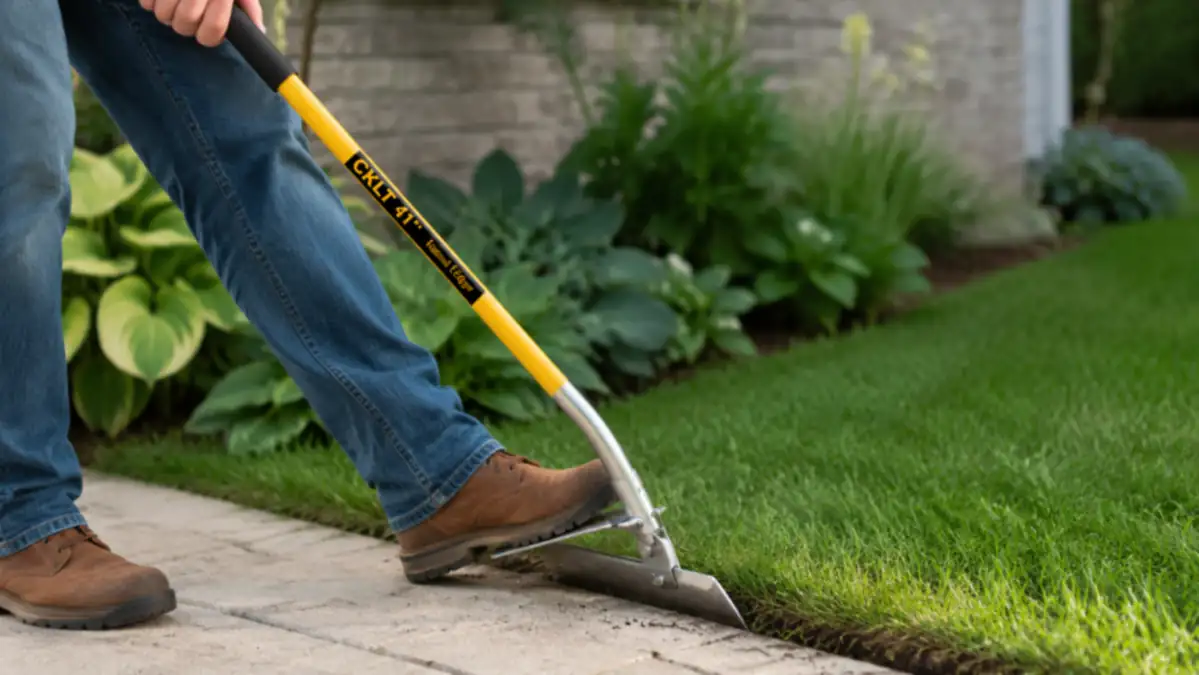
The half-moon blade is the whole selling point here, and on decent soil it does what it says. In the loamier ground along my curved garden bed, the blade sank in cleanly with one solid step, and rocking it forward gave me a crisp vertical cut with almost no ragged edges. Compared to the ragged line my old flat-edged spade used to leave, this was a real upgrade, a straight, defined border you could actually see from the street.
The rustproof manganese steel held its edge better than I expected too. I checked it against a piece of cardboard partway through the season, more out of curiosity than anything, and it still sliced cleanly rather than tearing. For a tool at this price point, I didn't expect the blade quality to be the strong point, but it genuinely was.
Where the blade's limits showed up was thickness of root mat. Along one section of the bed border where a mature yew had sent roots out toward the lawn, the blade would catch and stall rather than cutting through in one clean stroke. I had to work that section in short choppy passes, lifting and resetting the blade every few inches instead of the smooth rocking motion that worked everywhere else. It got there eventually, but it wasn't the effortless line I'd hoped for.
Foot Power and Compacted Soil, the Honest Part
Here's where I have to be straight with you, because I think a lot of reviews gloss over this. This is a manual tool. There's no motor doing the work, it's your body weight and your leg driving that blade down into the ground, over and over, for as long as the job takes. On soft, well-watered soil that's genuinely not bad. On compacted soil, especially the packed strip right along my driveway where years of foot traffic and car tires had turned the ground almost as hard as the concrete next to it, it was a real workout.
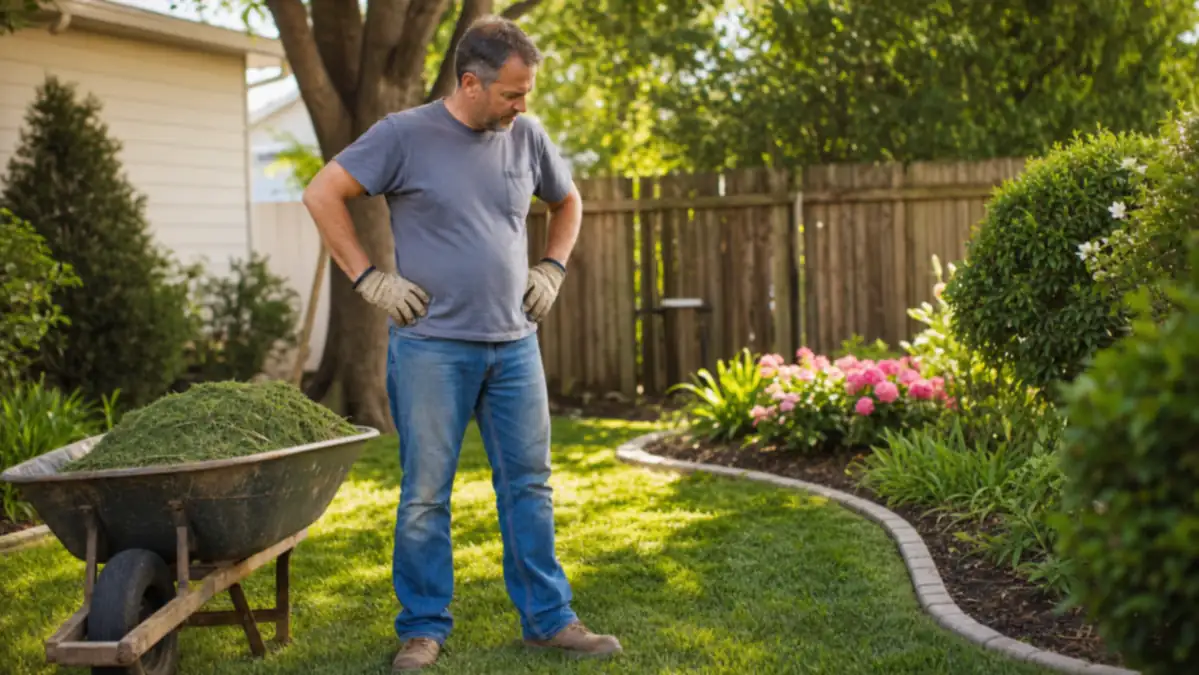
That driveway edge took me nearly forty five minutes for a section that should have taken fifteen, and I had to stop twice to catch my breath. I'm 58, reasonably active, and I still felt it in my hip and lower back the next morning. If your soil runs compacted, clay-heavy, or rocky, or if you've got knee or back issues, I'd think hard before assuming this will be a quick weekend chore. It's not that the tool failed, the blade still cut, it's that compacted ground asks a lot more of the person doing the stepping than the product photos ever show.
What helped was timing. I noticed a real difference edging the day after a rain versus edging during a dry stretch. Softer ground took maybe half the effort of bone dry, compacted soil. By midseason I'd started planning my edging sessions around the weather instead of just whenever I had a free hour, and that one change did more for my knees than anything about the tool itself.
Handle, Footplate, and Comfort
The long rubber handle keeps you standing upright instead of hunching over the way you would with a hand edging tool, which I appreciated on the longer sessions. My back thanked me for that part even on the hard driveway stretch. The rubber grip stayed comfortable through a full session too, no blistering the way a bare wood handle might have given me on a long edging day.
The wide footplate is the other half of the design that actually works. It gave my boot a stable, flat place to push down rather than having to balance on a narrow edge, which mattered a lot on the compacted sections where I needed real, sustained downward force. I wore regular sneakers for most of the season and my feet were fine, though on the driveway job I switched to stiffer work boots and noticed less strain through my arch by the end.
One thing worth mentioning for anyone taller or shorter than average, the handle length is fixed, and at just under six feet I found the working height comfortable. A neighbor who borrowed it for an afternoon, closer to five foot four, said she had to bend slightly more than felt ideal. It's not a dealbreaker, but it's not adjustable, so it's worth knowing your own comfortable working height before you commit to a full afternoon with it.
Durability Over the Season
I stored the edger in the garage between uses, mostly upright against the wall, and gave it a quick rinse after the muddier jobs. The blade held its edge visibly better than I expected for the price, and I didn't notice any flex or wobble at the joint between the blade and the shaft even after the rougher driveway sessions. The manganese steel lived up to the rustproof claim too, no orange spotting even after I left it out overnight once by mistake after a late job.
The one spot showing real wear by season's end is the footplate itself, which has a couple of visible scuff marks and a slightly bent edge on one corner from the driveway sessions where I was really leaning into it. It's cosmetic, it hasn't affected function, but it tells me this tool is working hardest exactly where you'd expect, right under your boot.
What Else I Considered
Before buying this I looked seriously at a corded electric edger, the kind with a small spinning blade you push along the line like a mini lawnmower. That would have made quick work of the driveway edge without the leg work, but it meant running an extension cord across the yard and buying a separate tool I'd only use a handful of times a year. I put together a closer comparison if you're weighing the same decision, in a piece on the CKLT edger versus an electric edger that breaks down where each one actually makes more sense.
I also thought about just borrowing a neighbor's electric string trimmer set to vertical mode, which some folks use in a pinch. It's serviceable for touch-ups between real edging sessions, but it doesn't cut the same clean vertical line a dedicated blade does, and it chews through trimmer line fast when you're using it that way. If you want the fuller case for why a manual half-moon blade gives a cleaner line than most alternatives, I laid out ten specific reasons in a separate piece on why a manual edger gives cleaner lines. As always, don't fixate on the number on the price tag alone, check today's price on Amazon and weigh it against what a powered tool would cost you.
What I Liked
- Tempered spring steel blade cuts a crisp, clean line in decent soil
- Wide footplate gives real leverage and a stable place to push
- Long rubber handle keeps you standing upright, easier on the back
- Rustproof manganese steel held up with no corrosion all season
- No cord, no gas, no battery to charge before you can start
Where It Falls Short
- Real physical effort required, noticeably harder on compacted or dry soil
- Struggled and needed choppy passes through thicker root mat
- Handle height is fixed, not ideal for shorter or taller users
- Slower than a powered edger on long stretches like a driveway
- Footplate showed cosmetic scuffing and slight bending after heavy use
It's not that the tool failed, the blade still cut, it's that compacted ground asks a lot more of the person doing the stepping than the product photos ever show.
Who This Is For
If your soil is reasonably soft or you're willing to time your edging sessions after a rain, and you'd rather not deal with a cord, a battery, or the noise of a powered edger, this tool does a genuinely good job for the effort involved. It's also a solid fit for anyone edging a smaller area, a walkway or a curved bed border, rather than a long unbroken stretch, since the physical demand stays manageable when the job doesn't drag on for an hour straight.
Who Should Skip It
If you've got a long driveway edge or a lot of total footage to cover, or if your soil runs compacted and dry most of the season the way mine does near the driveway, I'd think twice before relying on this as your only edging tool. Anyone with a bad back, bad knees, or limited stamina for repetitive stepping should weigh that honestly too, this is real work, not a quick five minute chore. For those situations a powered edger, even a modest corded one, is going to save your body a lot of wear over a season.
Still staring at a fuzzy line where your lawn should meet the walkway?
On soil that isn't rock hard, the CKLT edger's blade cuts a clean, satisfying line without a cord or a trip to charge a battery. See today's price on Amazon and decide if the leg work is worth the tradeoff for your yard.
Amazon Check Today's Price on Amazon →